Ted Holloway — directing an AI short
I directed eight shots by hand to find out exactly where AI video breaks: continuity, faces, keyframes. That map is now a node-graph pipeline my films are assembled from, which is why I can promise a brand team motion output without a studio retainer. (The film itself is a drifter explaining why AI won’t save us, built entirely with the AI he’s mocking.)
The test
A control task in the noise of new AI tools: direct a consistent short film — one clear character, one coherent visual language, controlled cinematic direction.
The theme
AI itself. Poking at the illusion that AI is the universal cure for every modern problem — through a dry, deadpan, slightly philosophical lens rather than a lecture.
The character
Ted Holloway — an old drifter with a gravelly Southern voice, calmly questioning whether AI is really the 21st century's miracle fix. His dog Diesel keeps him grounded and human.
Ted was the manual pilot. The pipeline has moved on.
This short was a hands-on stress test: every frame prompted, judged and re-shot by hand to learn exactly where the tools break. That knowledge is now wired into a node-graph pipeline — character, location and camera constraints as reusable blocks — so new films are assembled and iterated instead of re-prompted from scratch.
- Controlled direction, proven shot by shot
- Character system reusable across stories
- Tool limits mapped into workflow rules
- Next shorts ship from the node graph
Ted & Diesel: a repeatable character system
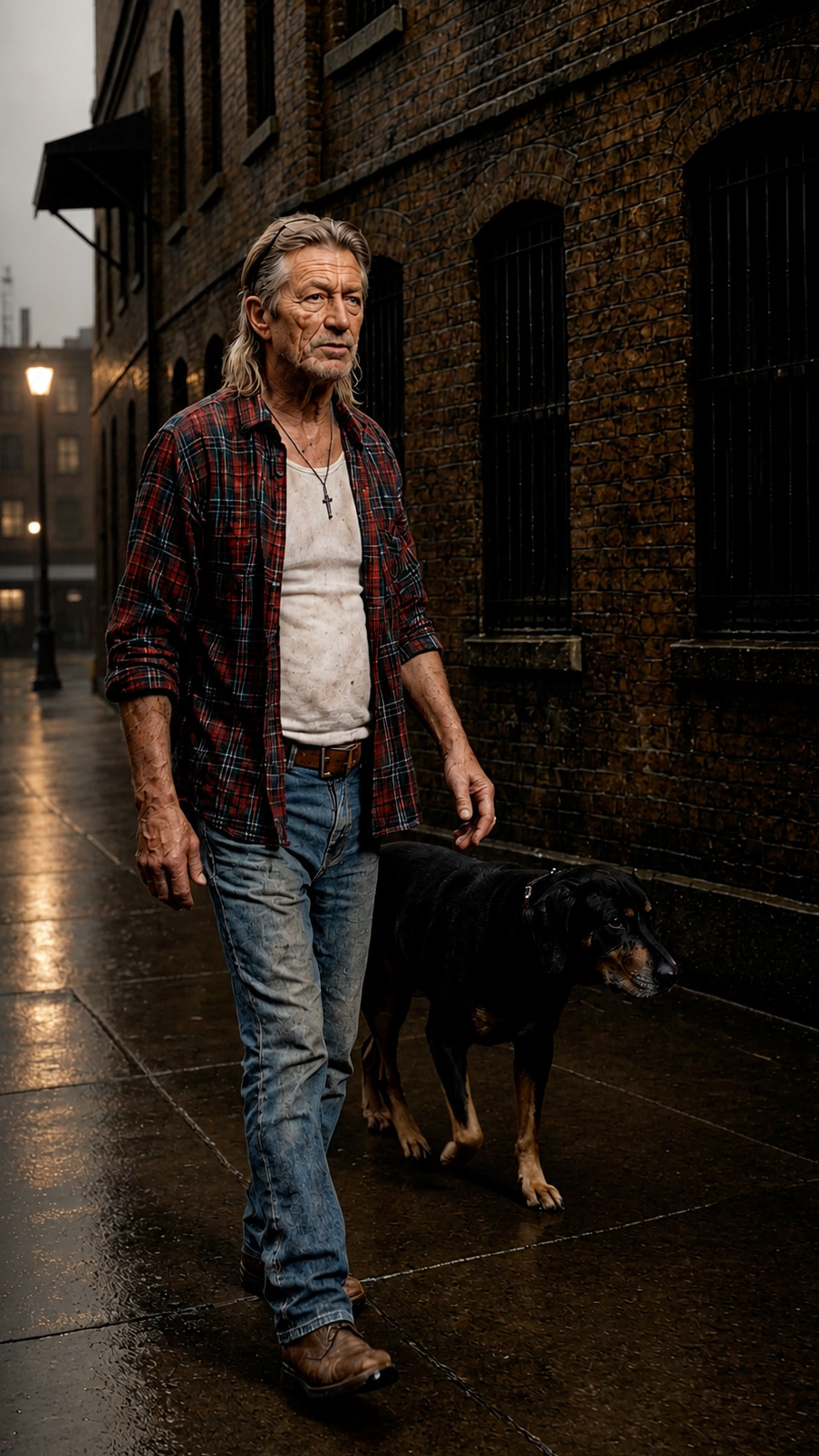
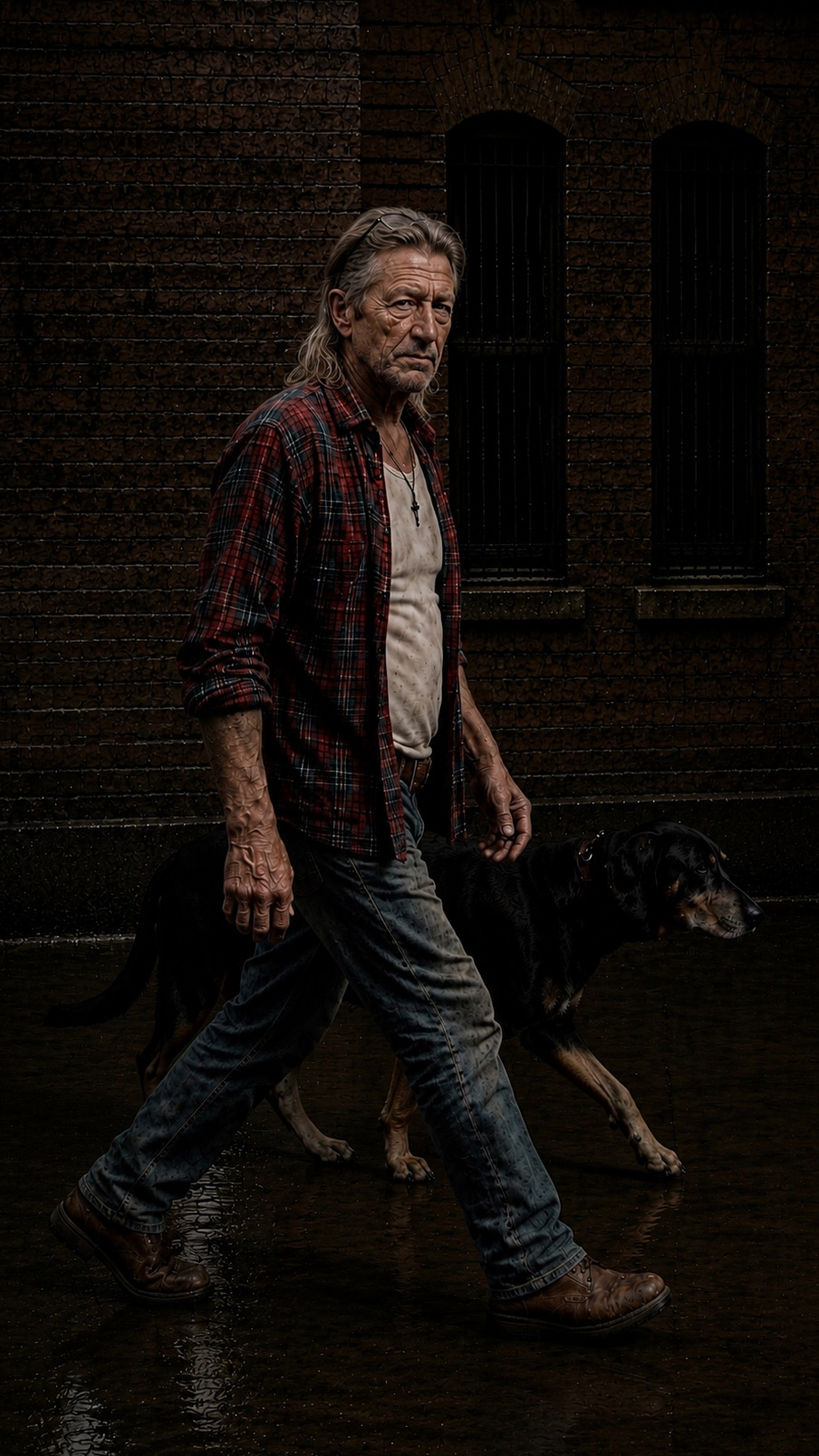
Ted is weathered, tired, dryly funny — a man who has seen too much and now explains the world in strange but oddly sharp metaphors. The goal was never a one-off AI portrait: face, hair, clothing, posture, the necklace, the voice and the mood all had to survive from shot to shot. Diesel is the quiet anchor that keeps the scene human.
Character sheet: profile, tattoo and Diesel, the consistency anchors
The reference set every shot was checked against before it went into the edit
The trailer park fit Ted perfectly. It didn't fit
the tools.
Version one lived among rusty trailers, dusty roads and warm light — Ted outside, delivering a philosophical joke about AI, wisdom and a goat. Single frames looked great. The moment it became a multi-shot sequence, the real problem surfaced.
- Roads moved between shots
- Trailers appeared and vanished
- Background geography stopped making sense
- Acceptable for one image — fatal for a film
The location wouldn't hold still.
Three takes from the same “place”: roads moved, trailers vanished, geography drifted. The challenge stopped being pretty visuals and became a production problem — design
the story around the limits of the tools.
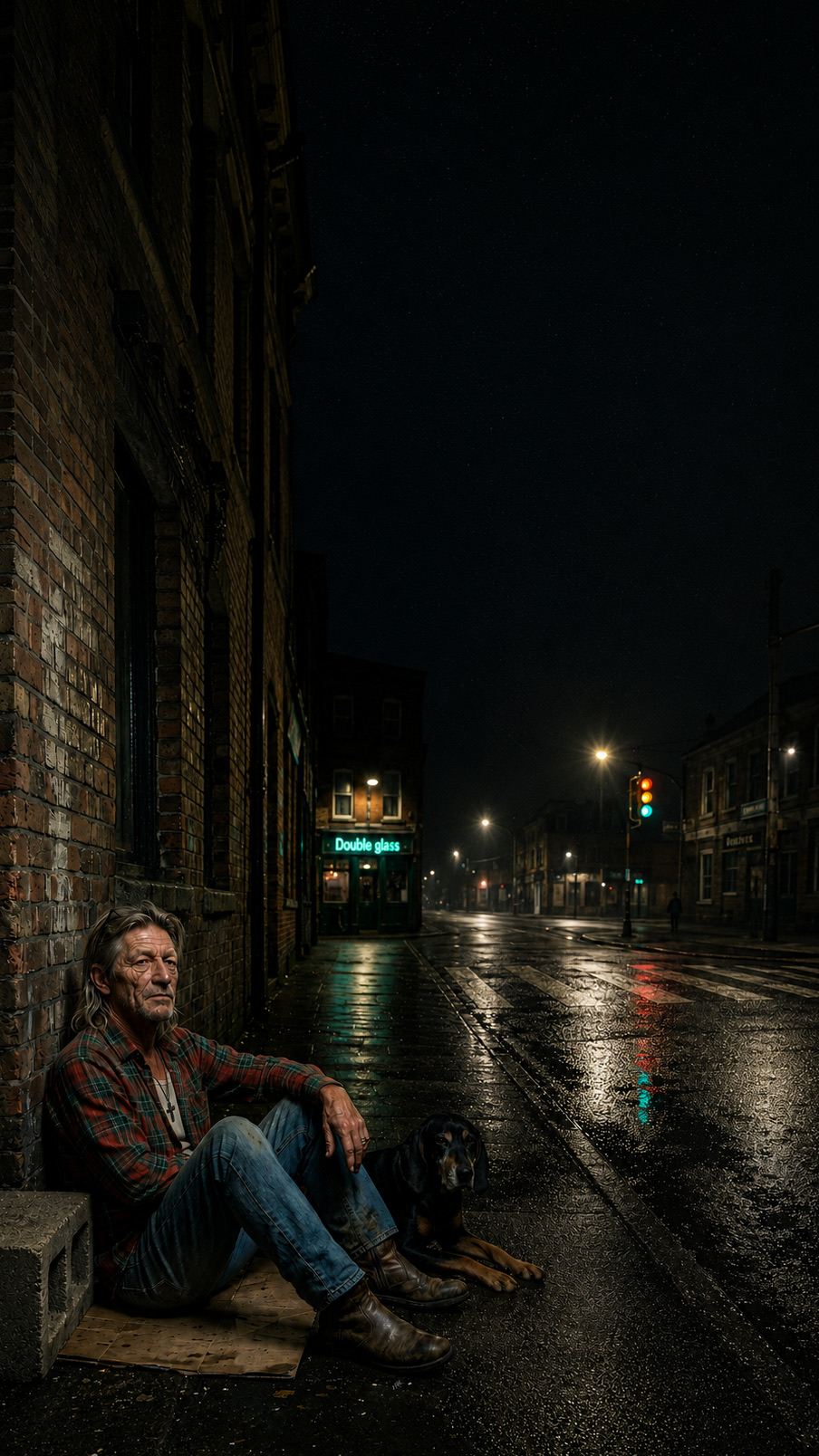
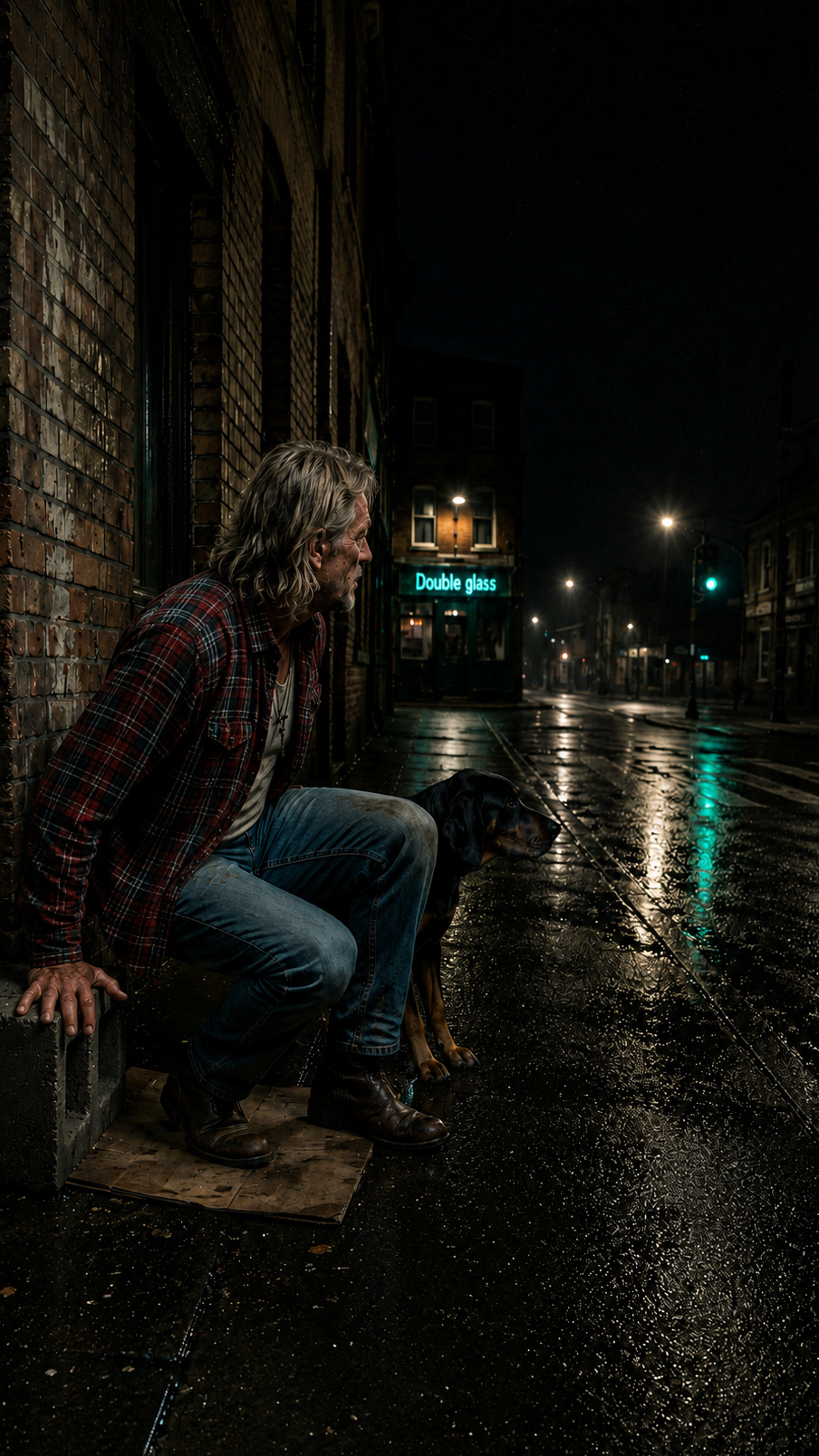
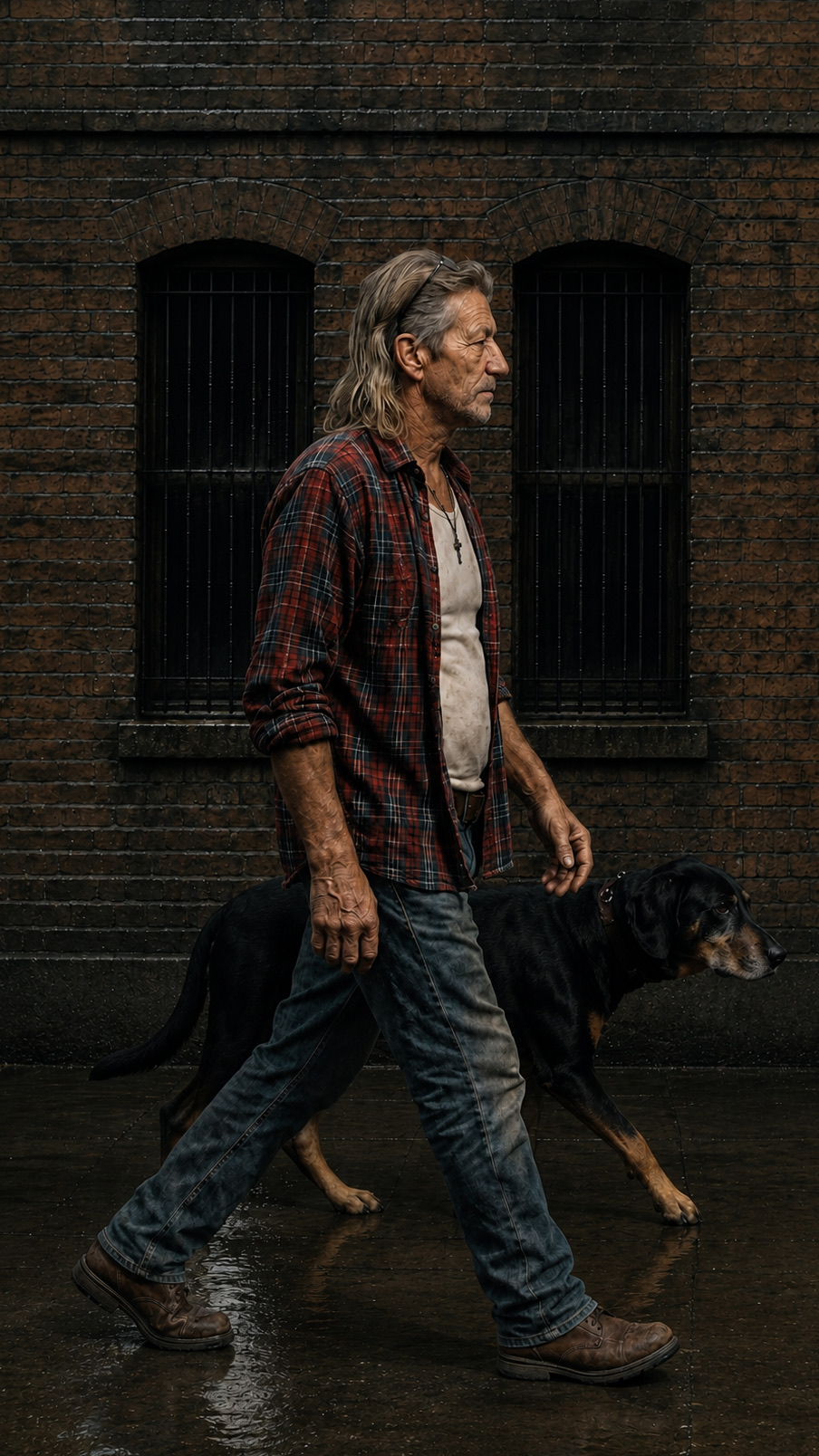
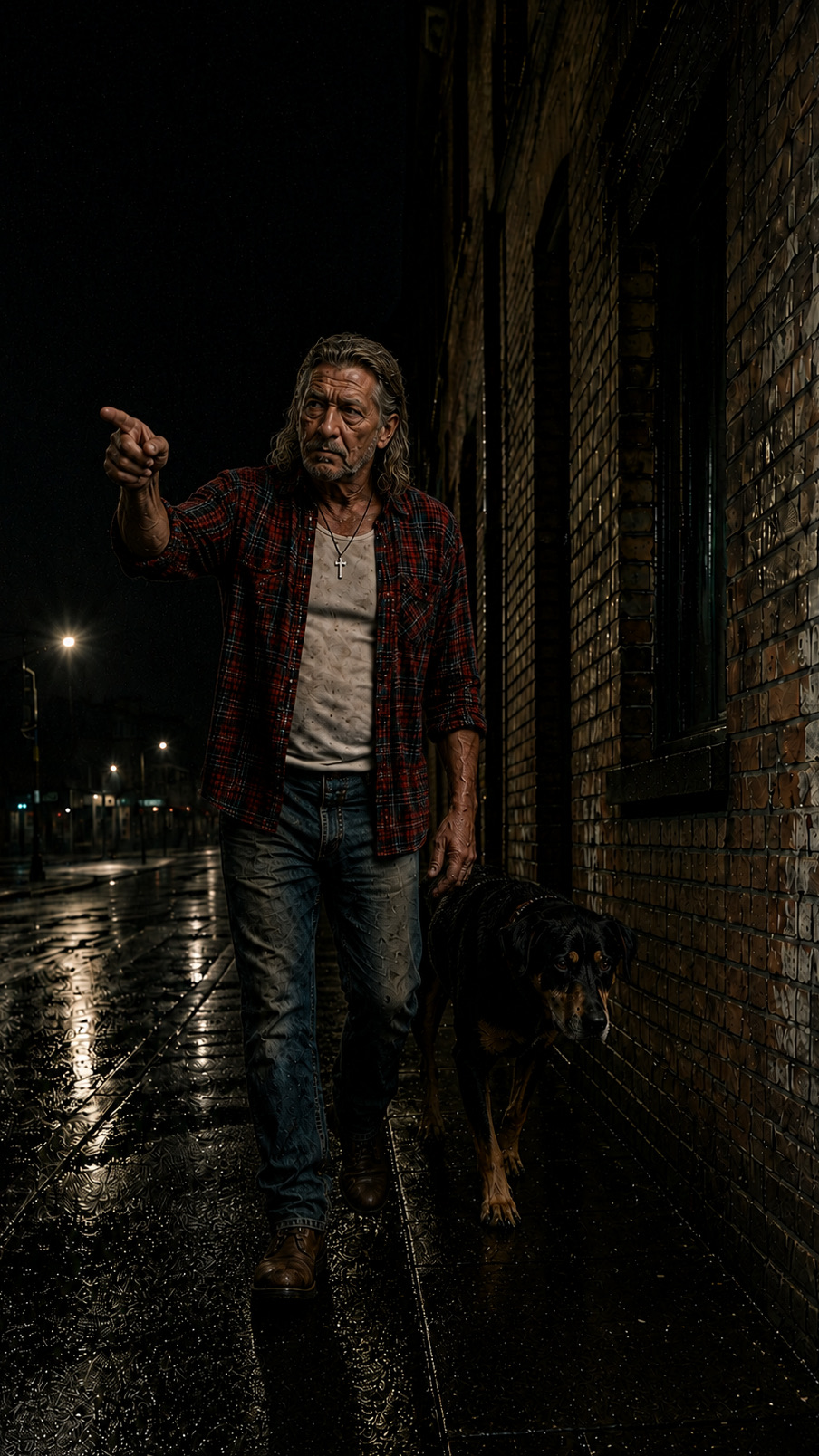
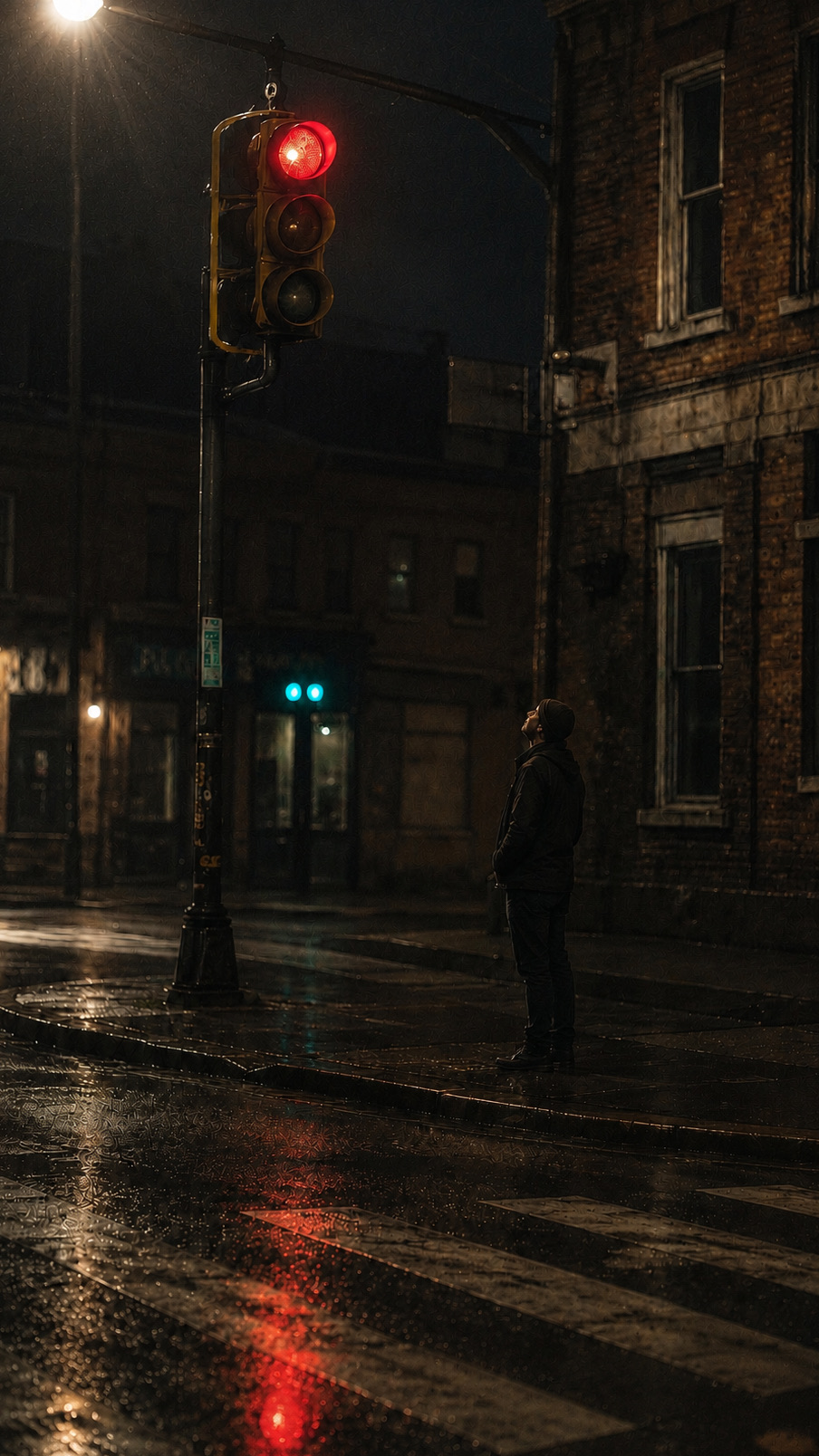
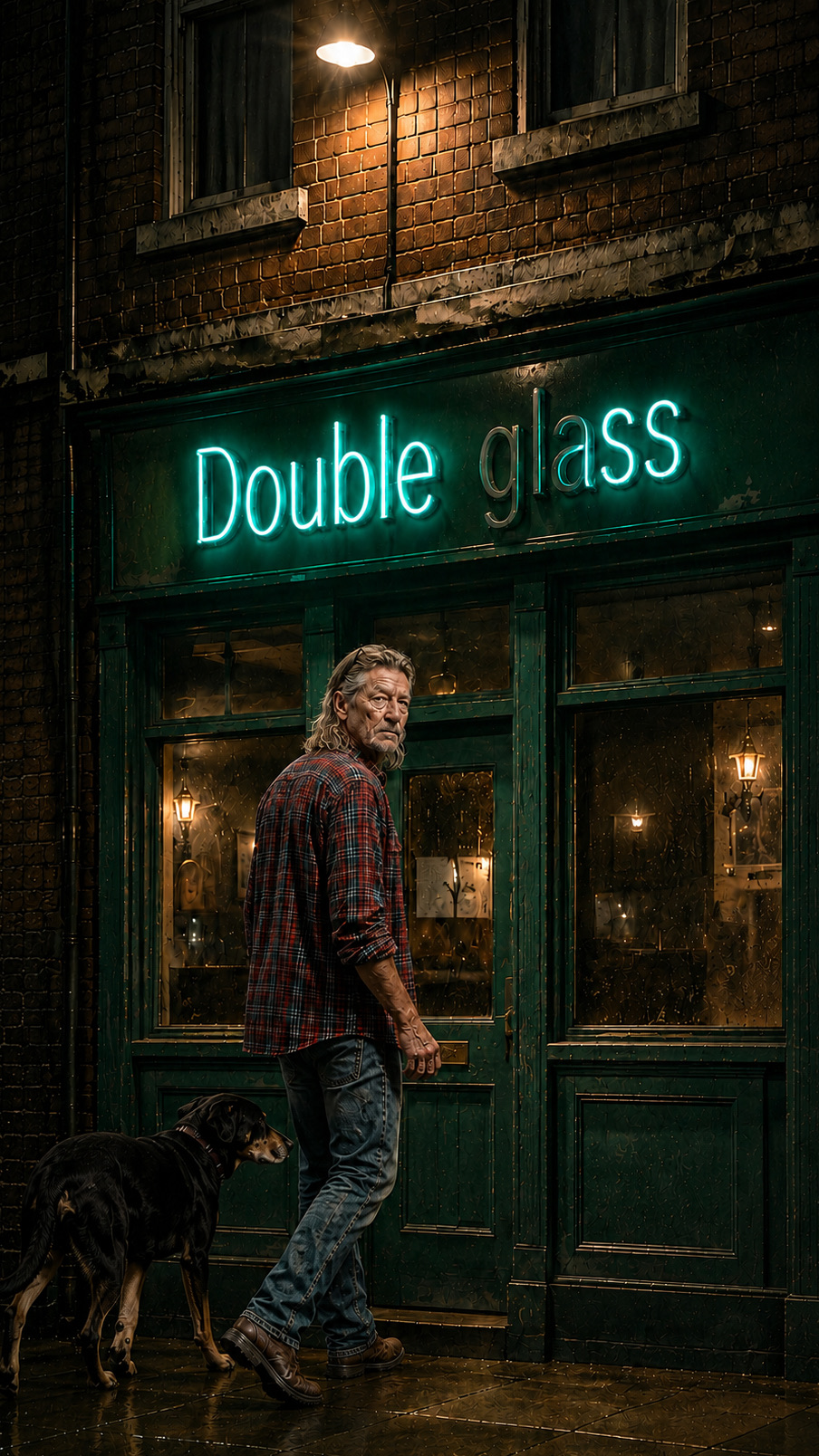
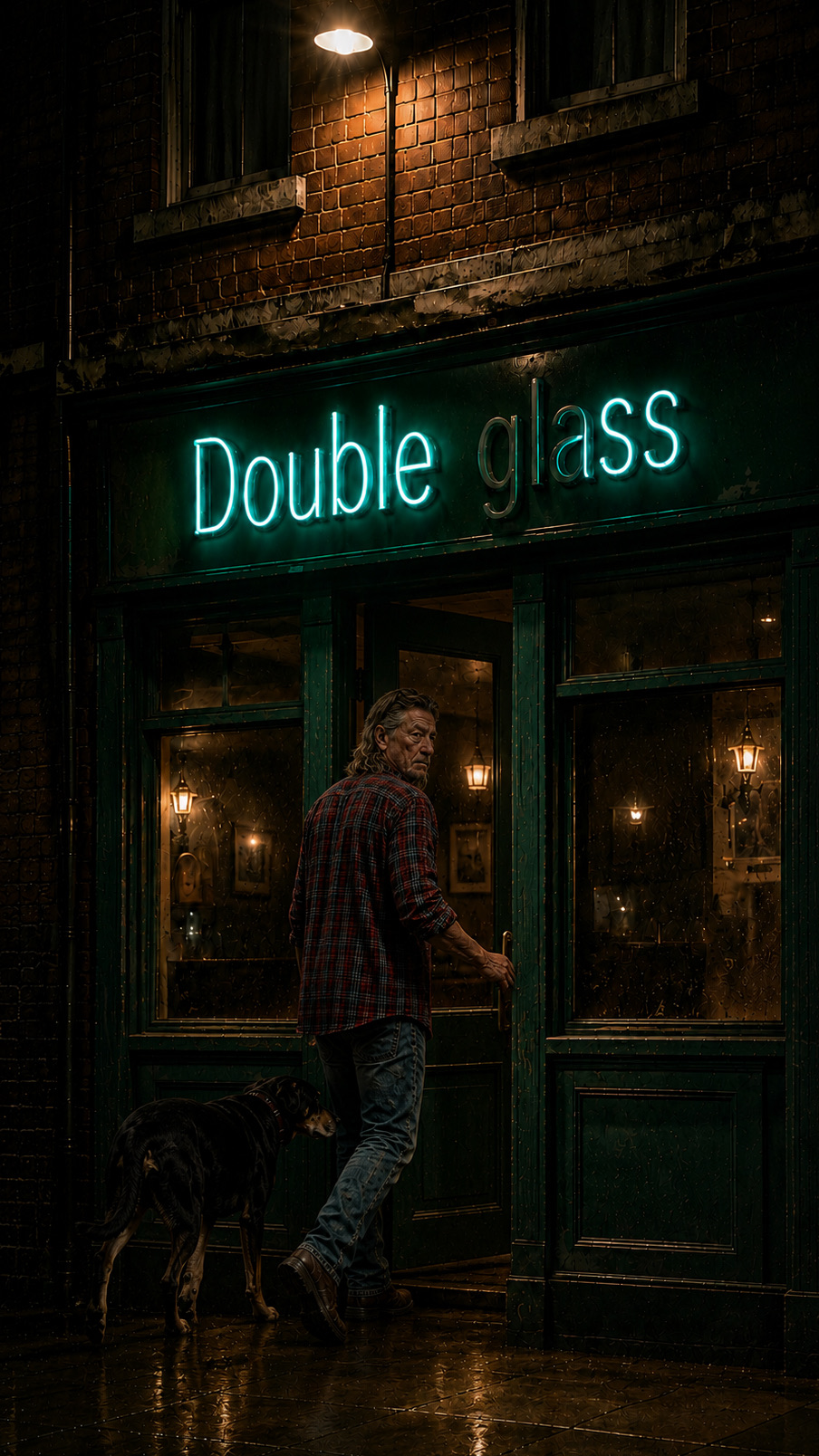
A rainy street outside “Double glass”.
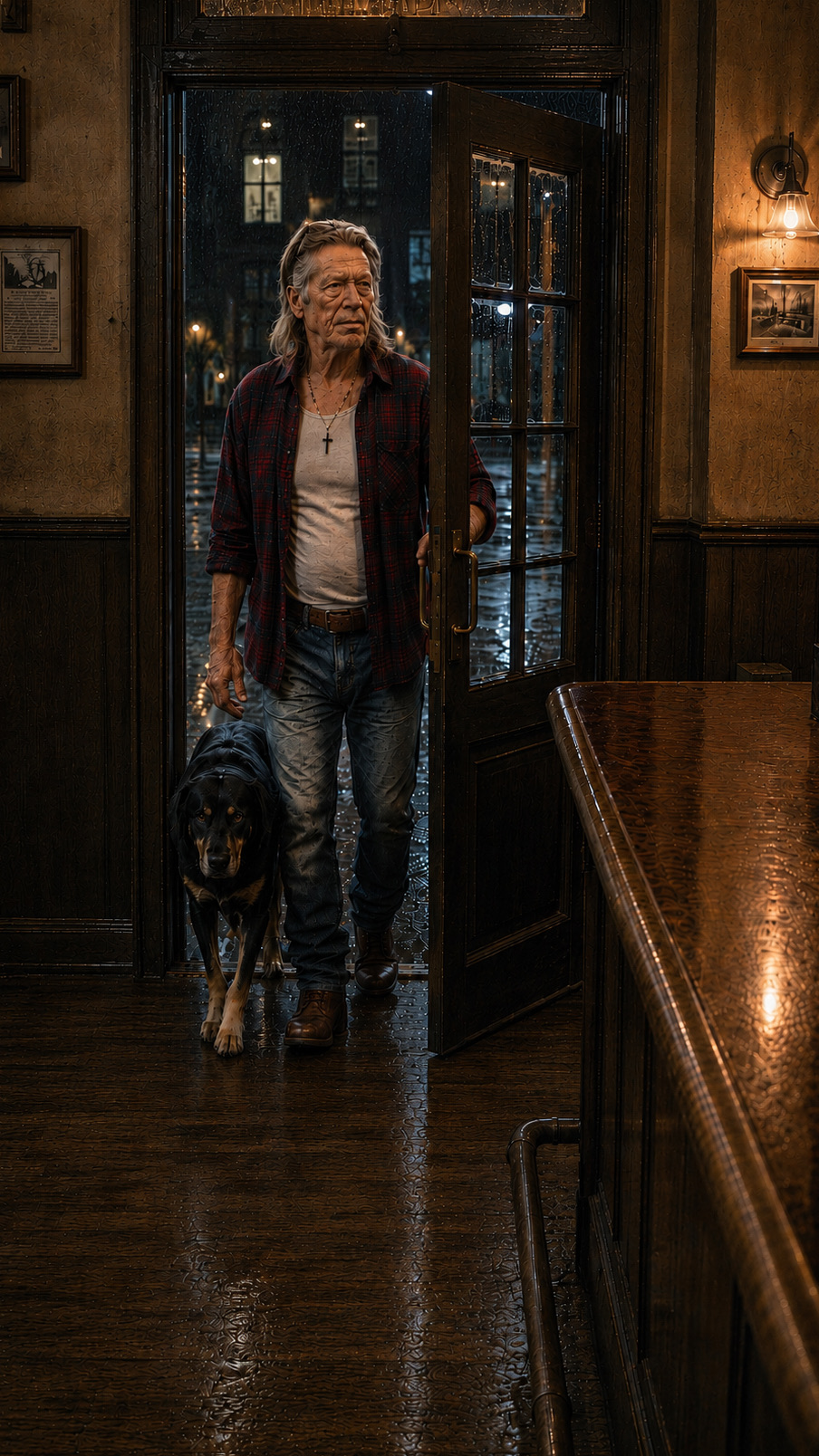
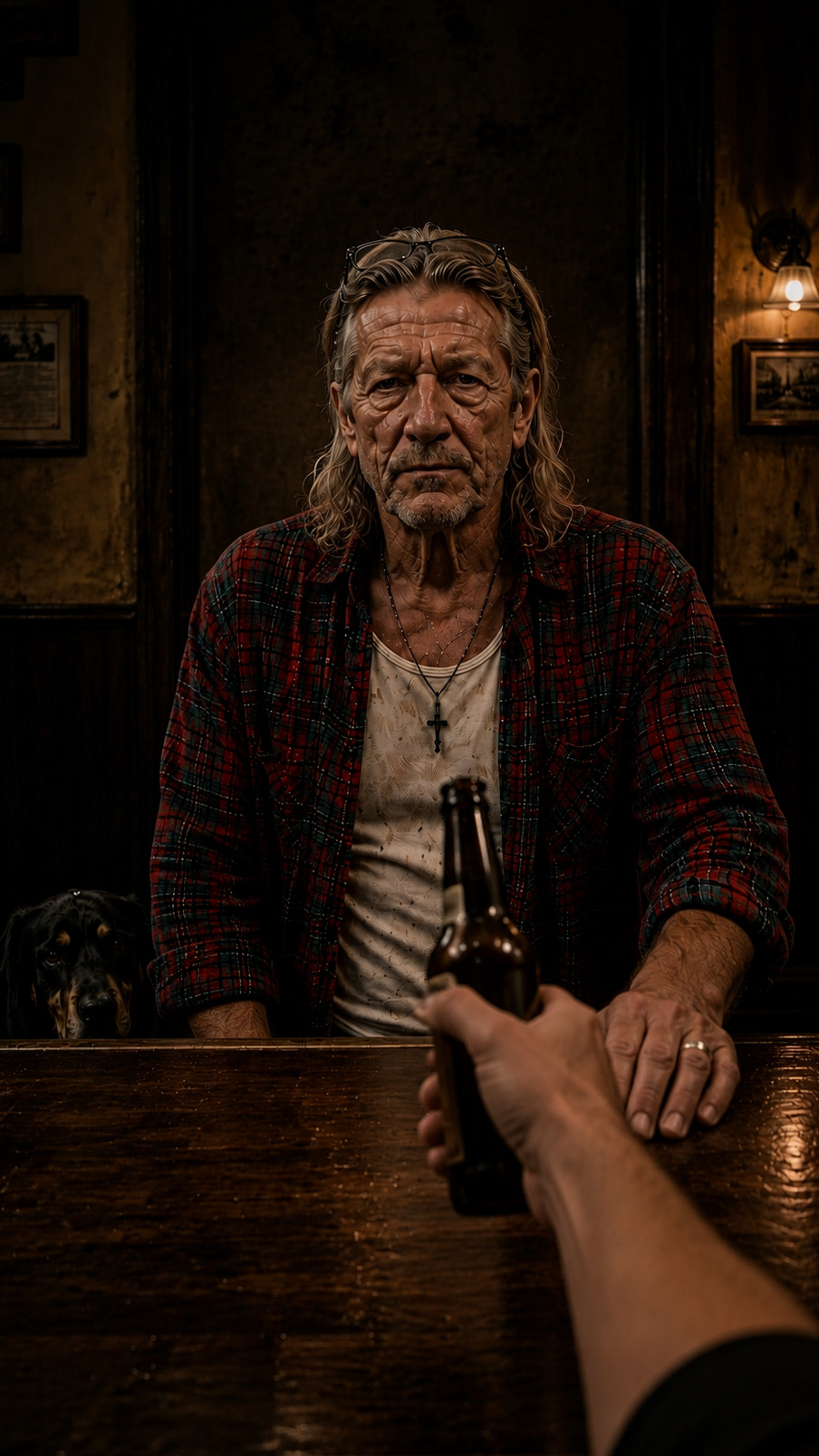
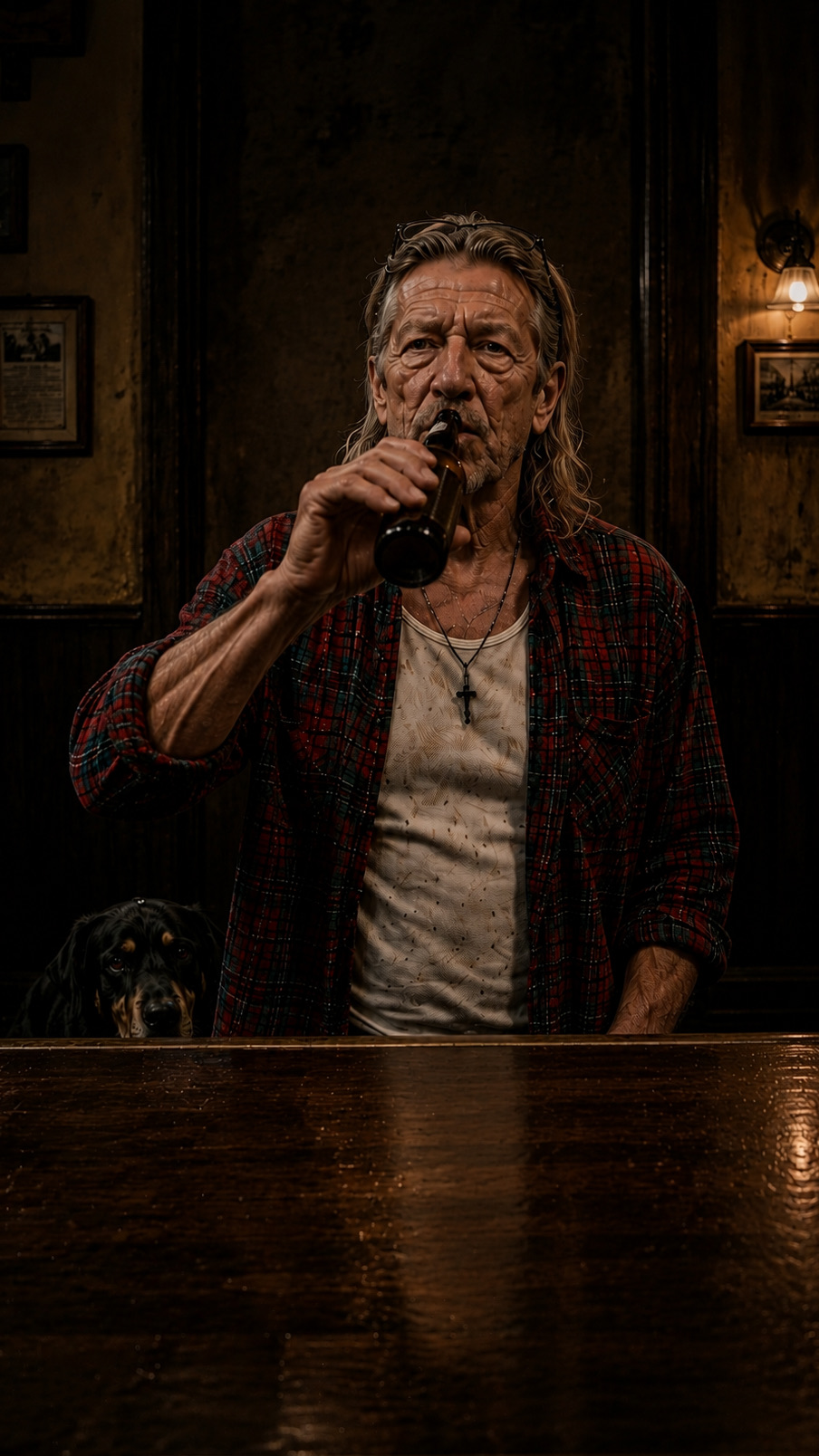
One pub, one green neon sign, one wet night. The fixed landmark unified the palette and simplified continuity, and it pushed the story somewhere darker: a sidewalk-prophet piece that ends with Ted walking into the pub for good.
What the tools fought me on.
Slow-motion at higher resolution
The same shot drifted into slo-mo at 720p while 480p moved naturally. Fix: generate clean motion, control speed in the edit.
Faces melting on upscale
Generative upscalers repaint faces into a plastic HDR look. Fix: get identity right at generation — don't ask an upscaler to save a weak frame.
Keyframes that wouldn't anchor
The model ignored exact start poses and invented its own. Fix: describe the opening pose in the first line and lead with motion, not negatives.
Four working principles.
Reduce uncertainty
A better prompt is not a longer one. It names what must not change: identity, clothing, framing, lighting and mood, in that order.
Location as anchor
A single recurring landmark holds a sequence together far better than hoping a complex set regenerates the same way on every take.
Keyframe anchoring
Pin the opening pose first and pin it explicitly, then let the motion grow out of a fixed start rather than a reinterpreted scene.
Voice as continuity
The same dry Southern drawl across every line ties the shots together at least as firmly as the visuals do.
One continuous monologue
Edited 9:16 sequence
Trailer park → rainy street
Concept to final cut
If this is the kind of case you are hiring for, I am happy to walk through the decisions behind it.