Rian Walsh — an AI character for short video
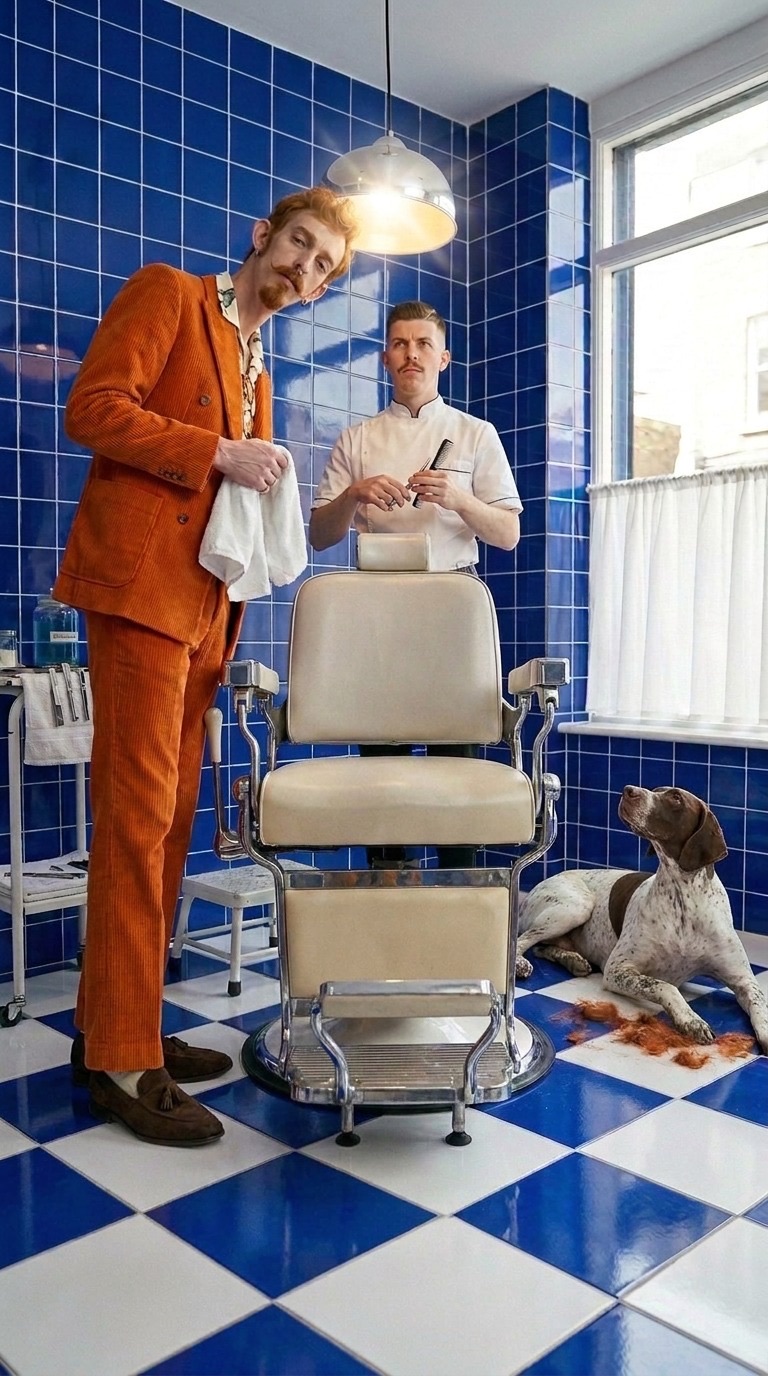
My own learning project: one fictional character for short vertical video, built to stay the same face from one shot to the next. Rian is a two-metre Irish ex‑model, thrown out of fashion for saying what he thought, with a pointer called Garlic who ignores him. I made his reference sheets first, then the first episode: 28 seconds in a barbershop.
The project
Learn scripting, editing and AI video on one recurring character instead of one-off clips. The plan runs twelve weeks; followers are tracked, not the goal.
The character
Rian Walsh, about 2.05 m tall, from a fishing town in Connemara. Fashion dropped him after a phone video made it look as if he had pushed a designer; now he runs an Instagram account and despises it. Garlic, an English pointer he won at cards, is the only one he respects.
The first episode
“The haircut”: Rian in an orange suit in a blue-tiled barbershop, complaining about the internet's advice to young men while Kyle the barber works. Five scenes, one monologue, 28 seconds.
Voiced, five scenes, 9:16
Face, body, emotions, Garlic, Kyle
Kling, Veo, Seedance, Vivix A1
First reference to reel v4
Counted from the project folder: the reference files, the test clips for each model, and the file dates.
The face is made once. Every frame after it starts from it.
The face was generated and approved before any scene existed. Every keyframe since is made from it and from the sheets beside it: full height with Garlic for scale, expressions and hands. A fresh prompt for each frame is how a character drifts from one post to the next.
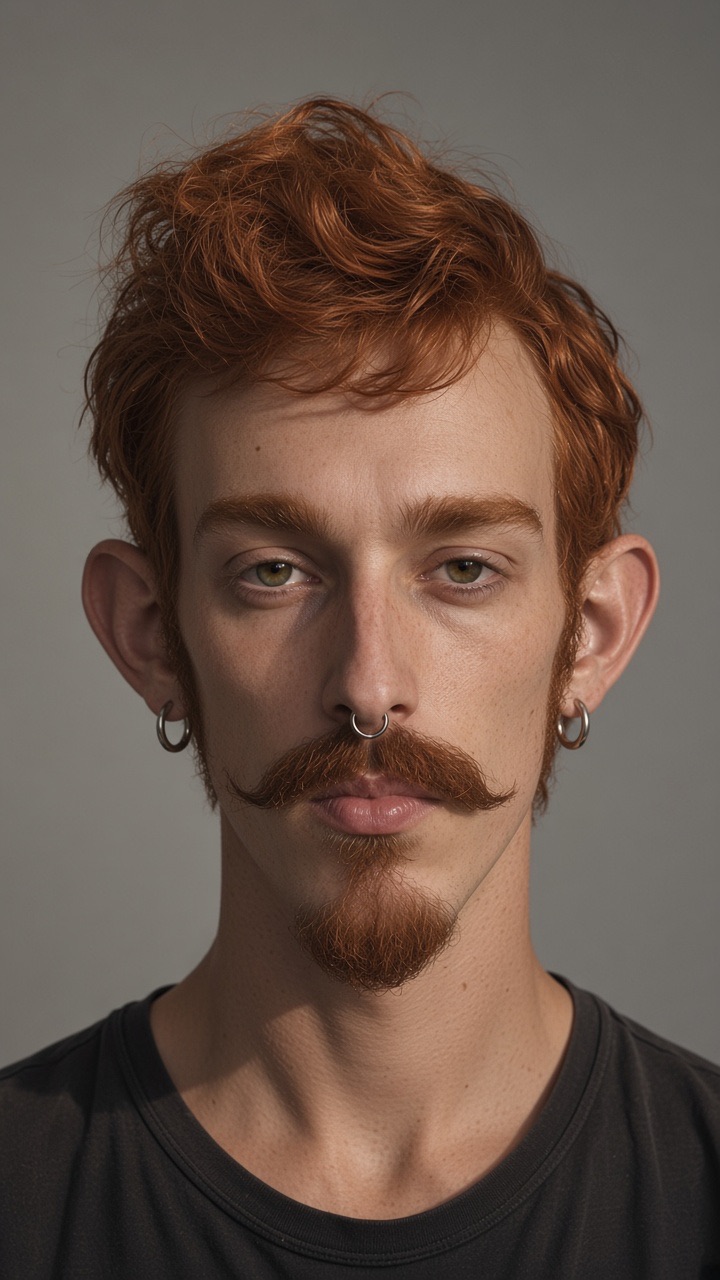
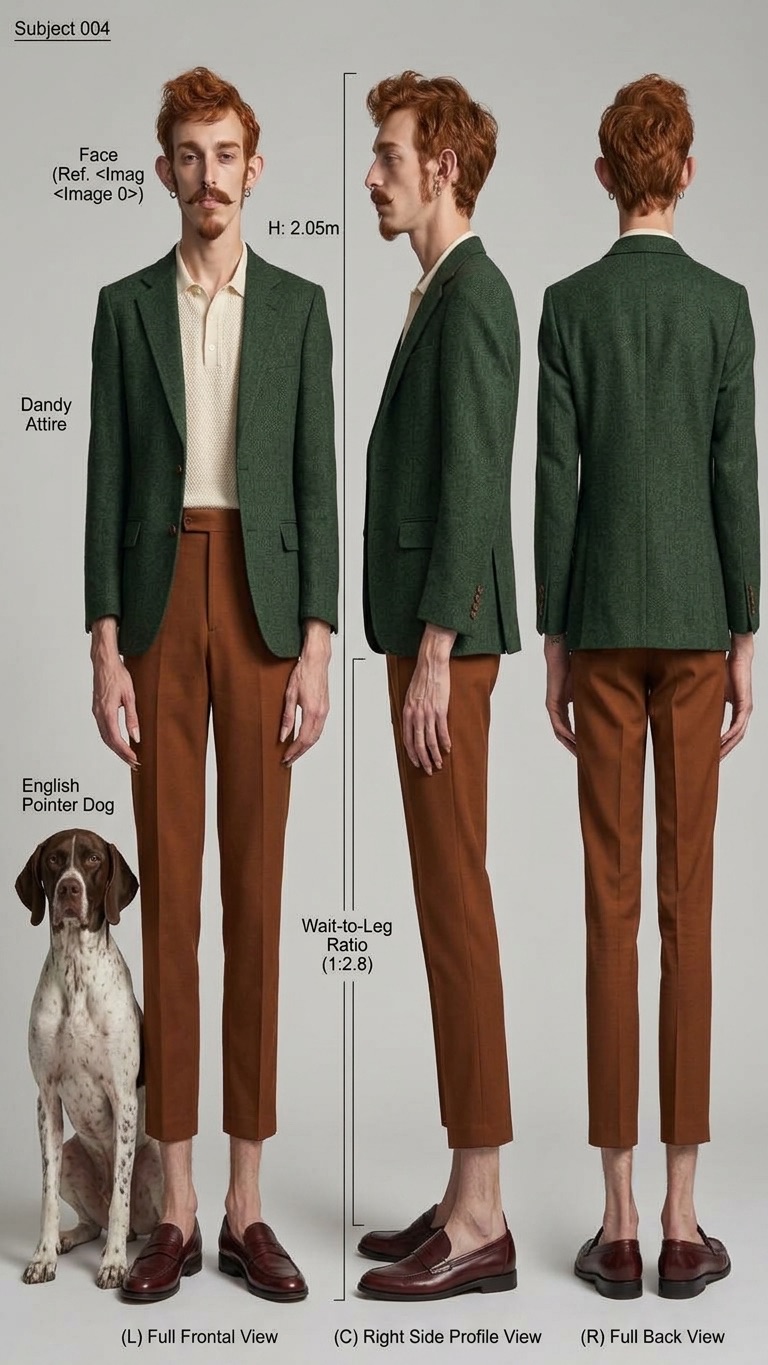
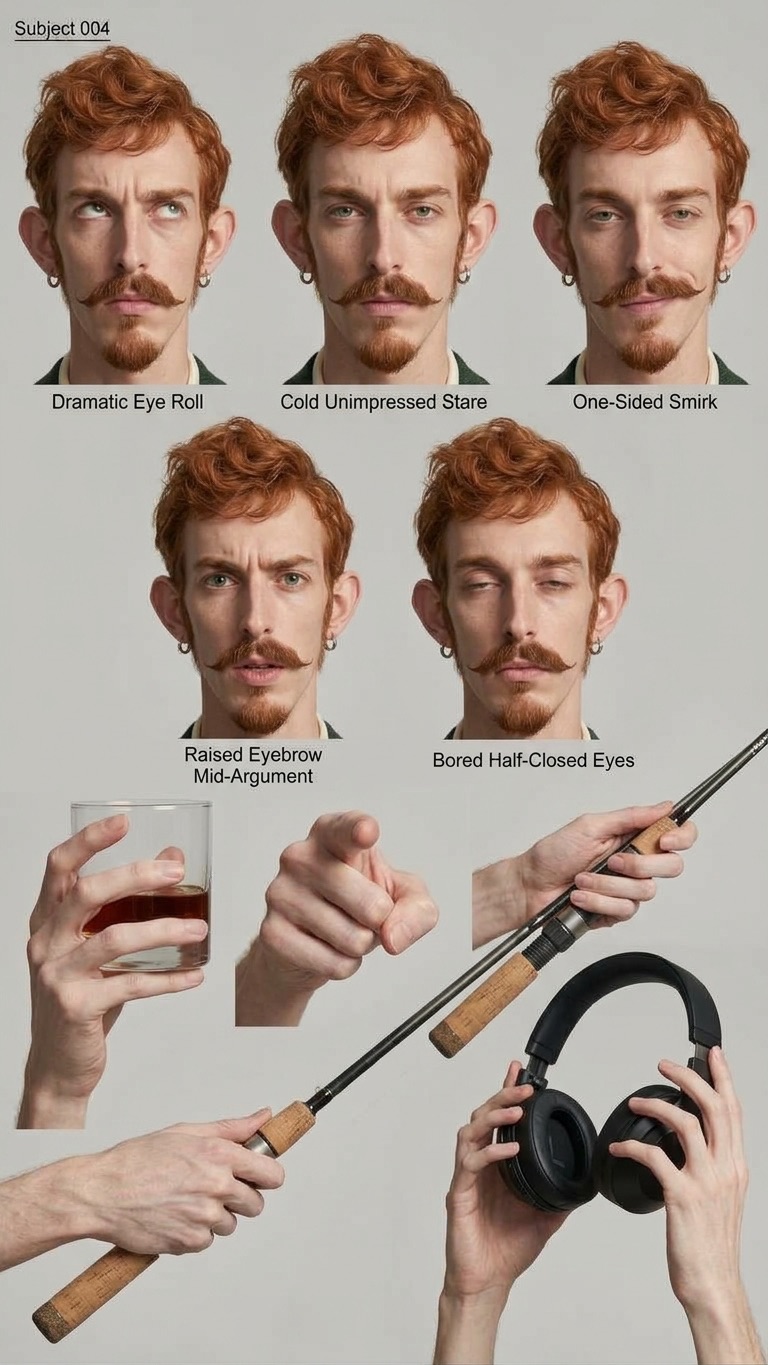
Kyle: one other face per episode
The plan allows one other person in frame beside Rian. Everyone else stays off screen, as a voice, a pair of hands or a back, because every extra face that has to stay recognisable doubles the work.
Kyle the barber got his own reference sheet, and a freeze-frame title card the first time he appears: “KYLE. Perfect haircut. Still single.”
Kyle's reference sheet: front, side, and the haircut he is known by
Voice first, then pictures.
Script and voice
The monologue is written to a fixed shape, a slow set-up and one short punchline, and voiced in ElevenLabs before any picture is made.
Keyframes
Each scene starts as a still made from the reference sheets, checked against them before it is animated.
Short shots
Image to video, one scene at a time, 5 to 12 seconds each. Short shots hold the face better than one long take.
Lip sync and cut
The talking shots are synced to the voice, then cut together with a name card for each new character.
Every scene starts as a still.
The opening in the chair, the haircut, and the ending, when Rian stands up and Garlic stays on the floor.
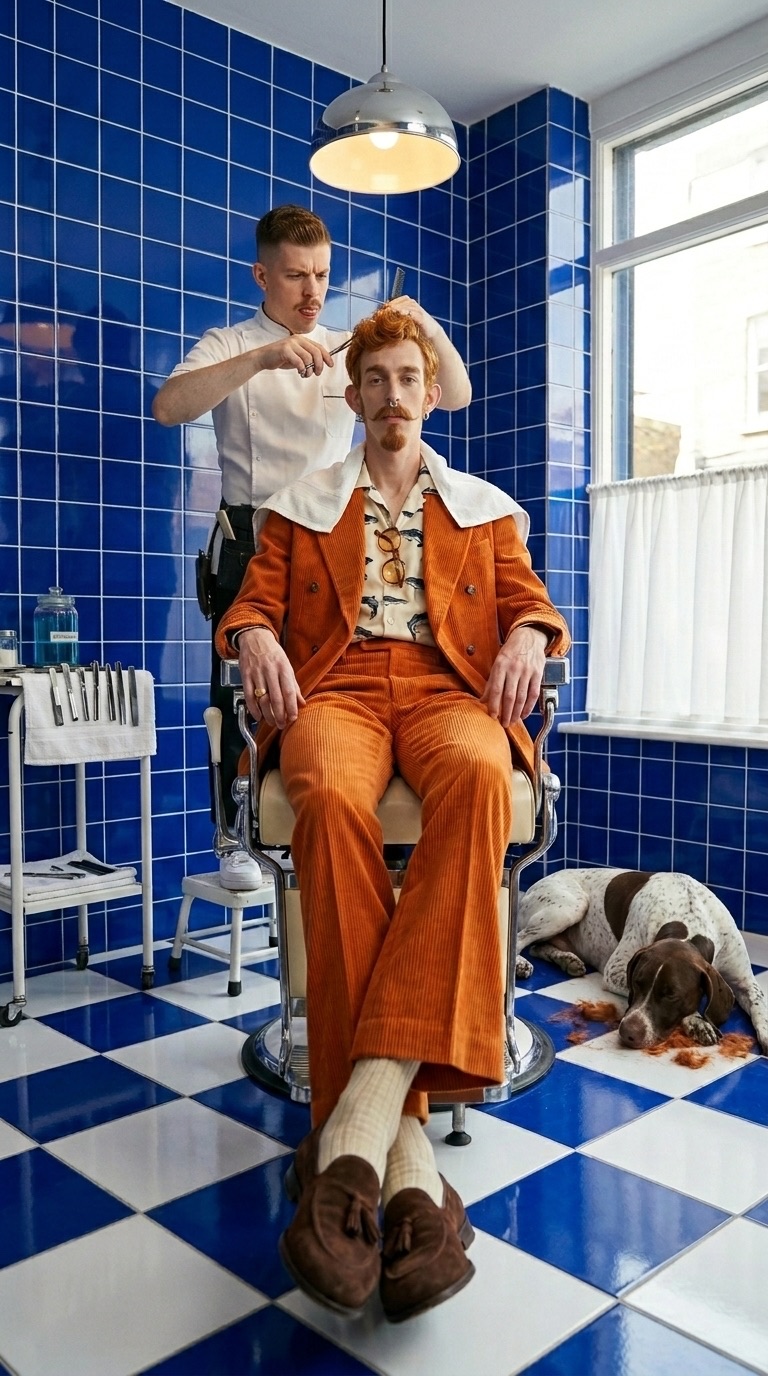
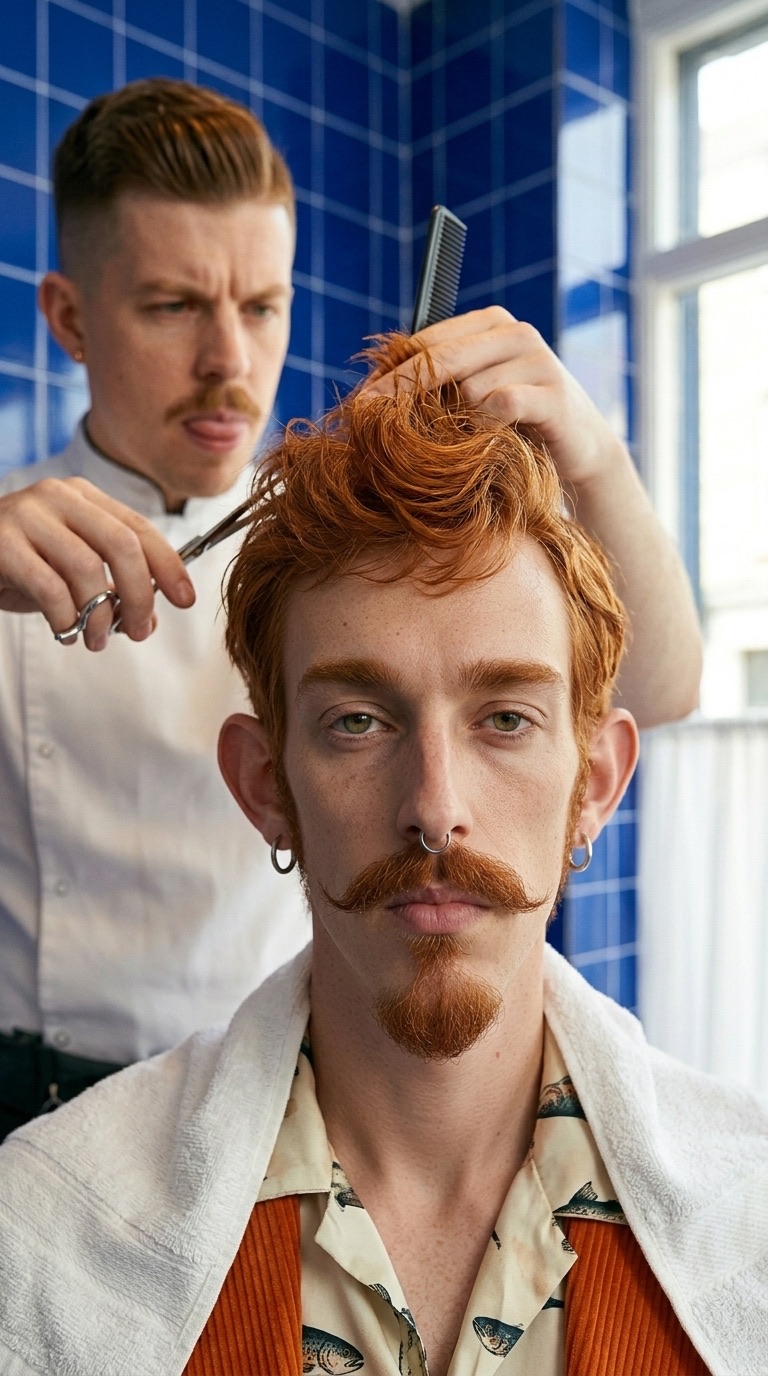
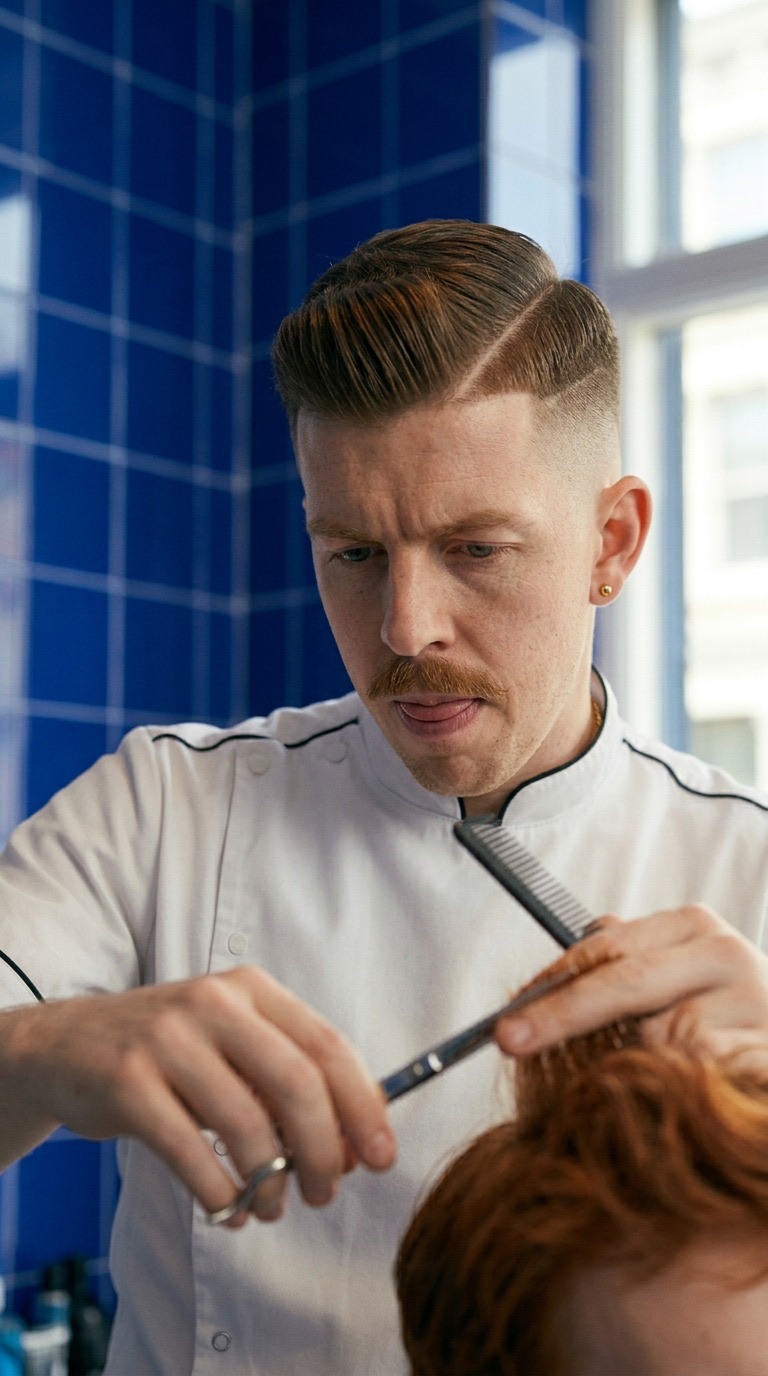
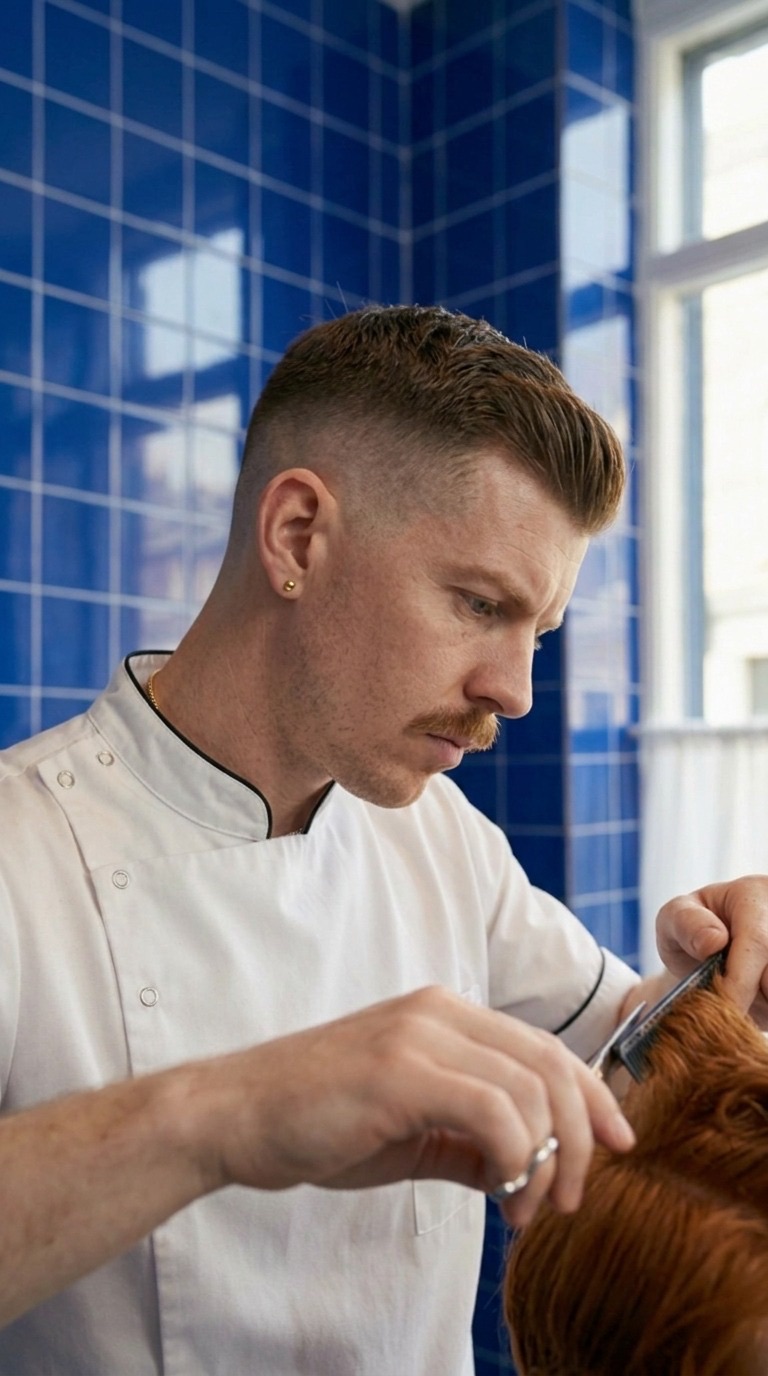
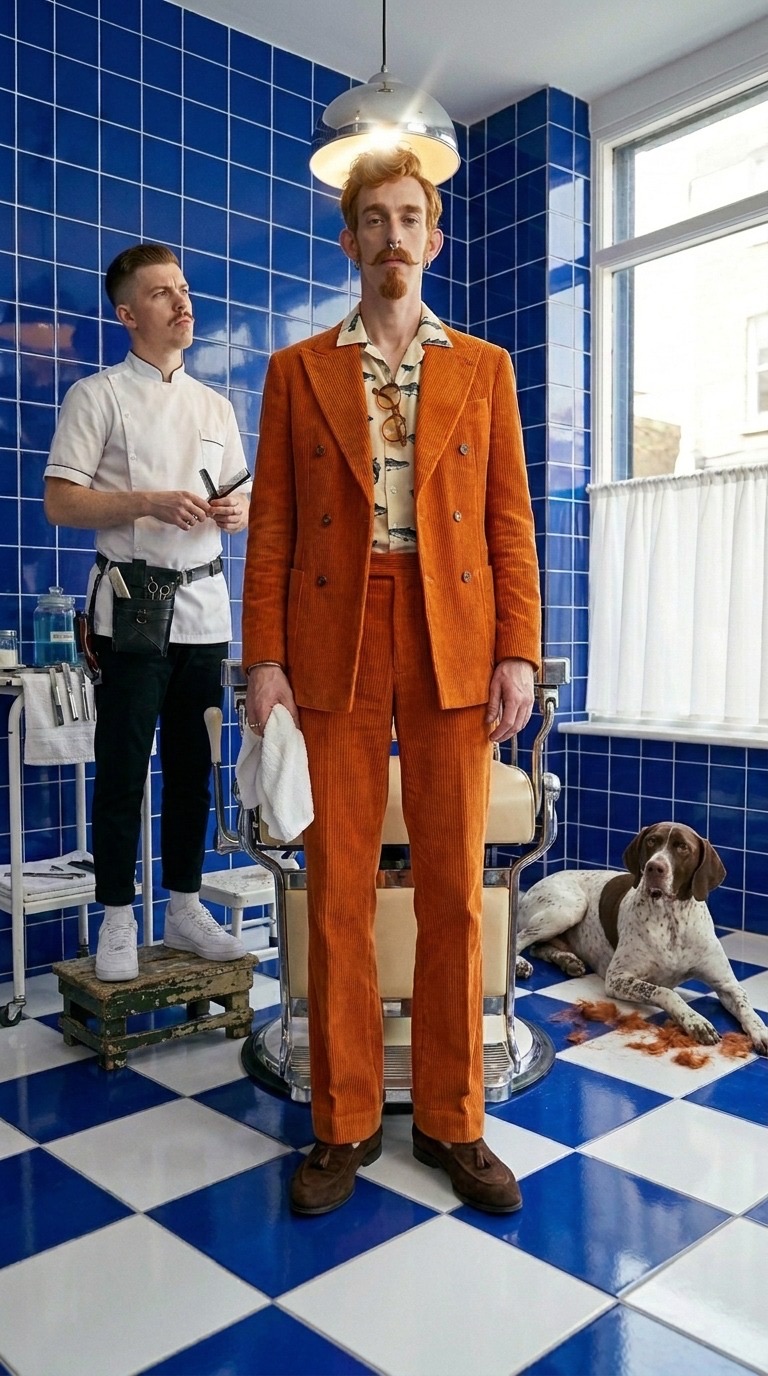
The opening shot, through Kling and Veo.
The same keyframe, animated twice in Kling and once in Veo. Veo returned a 16:9 frame with the vertical picture inside it; it is cropped back to 9:16 here.
A free model that lost the face.
On 13 October I ran a keyframe from the next script and a 24-second monologue through Vivix A1. It was fast, 26 seconds to render 24, and the room held. The character didn't.
- The face softened
- The septum ring and the amber glasses disappeared
- No eye roll, which is his signature
- The picture read as AI at a glance
If this is the kind of case you are hiring for, I am happy to walk through the decisions behind it.